
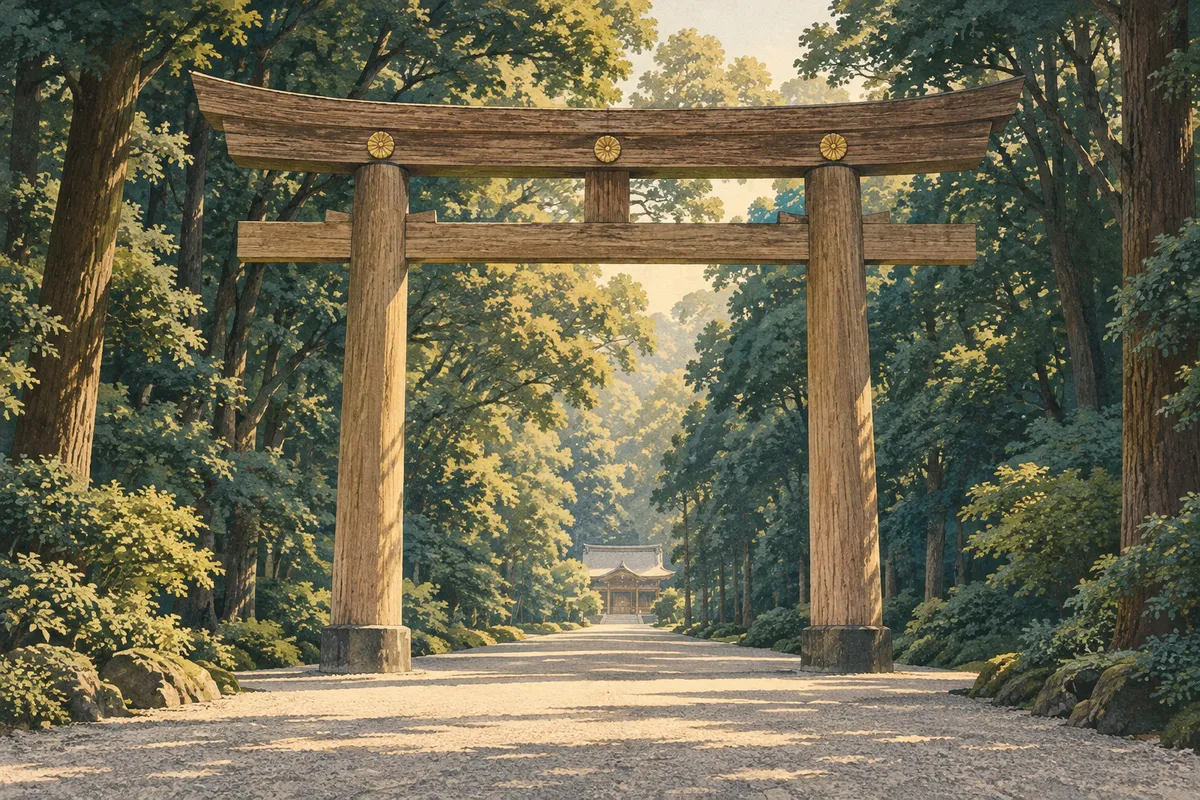
Meiji Jingū
明治神宮
- Address
- 東京都渋谷区代々木神園町1-1
Collectible stamp
An original digital stamp by emonster for your Temple Quest collection.
Discover Temple QuestComing soon for iPhone & iPadTemple Quest collectible artwork, separate from official goshuin.
History
Meiji Jingū was founded in 1920 to enshrine Emperor Meiji and Empress Shōken. Its planted forest was created with trees donated from across Japan.
Sources1
Timeline
Founding, rebuilding, and milestones across the centuries.
- 1920
- 1920
- 1958
About the era labels
Browse places by founding, rebuilding, and other events in each historical era.
Explore the grounds
An illustrated overview of the grounds. Match the numbers to the landmarks below.
Landmarks on this map
Kagura Hall
Hall for prayers including family well-being, protection and children's celebrations.
Vehicle Purification Hall
Vehicles are purified here after traffic-safety prayers at Kagura Hall.
Meiji Jingu Museum
Museum preserving objects associated with the enshrined Emperor and Empress.
Forest Terrace
Visitor facilities with restaurants, a cafe, a food court and commemorative gifts.
Torinso
Building incorporating the relocated Tokaden, which has links to the enshrined family.
Treasure Museum
An early reinforced-concrete building designated an Important Cultural Property.
Map sources & credits
Visiting information
Hours, admission and access can change. Confirm current details with the site before travelling.
Opening hours
The shrine opens at sunrise and closes at sunset; exact times vary by month.
Sources2
Admission
General shrine admission is free; this does not include every facility.
The museum charges admission. Check the official website for current prices.
Sources1
Getting there
The entrance and main shrine are separate walking destinations.
Sources1
Access & etiquette
Visitors must stay out of the forest. Collecting or bringing in plants and animals is prohibited; vehicles enter through the Yoyogi entrance only.