
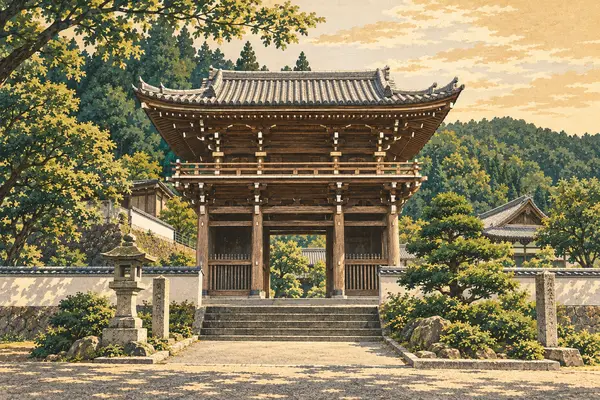
佛木寺
Butsumoku-ji Temple
Butsumoku-ji preserves a foundation legend involving Kūkai, a cow and a luminous jewel. Its animal-memorial tradition developed from prayers for working livestock and now also includes other animals and pets.
Discover the places in this prefecture, with original illustrations and links to visitor sources.
9 places
8 Temples · 1 ShrinesBrowse places by founding, rebuilding, and other events in each historical era.
佛木寺
Butsumoku-ji preserves a foundation legend involving Kūkai, a cow and a luminous jewel. Its animal-memorial tradition developed from prayers for working livestock and now also includes other animals and pets.
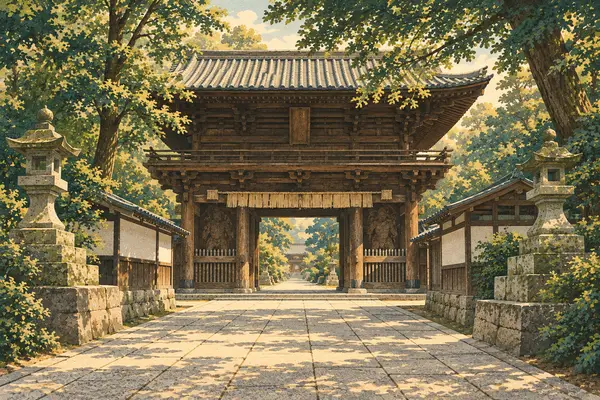
石手寺
Ishite-ji preserves medieval buildings including its 1318 Niō gate, designated a National Treasure. The association distinguishes the gate from other nationally protected halls, pagoda and bell, rather than applying one designation to every building.
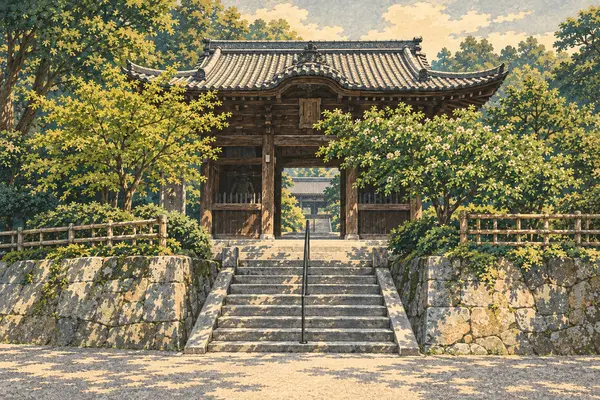
浄土寺
Jōdo-ji's founding account concerns Emyō, an image attributed to Gyōki and imperial patronage. The association describes later restoration by Kūkai and preserves the temple's connection with the itinerant monk Kūya.
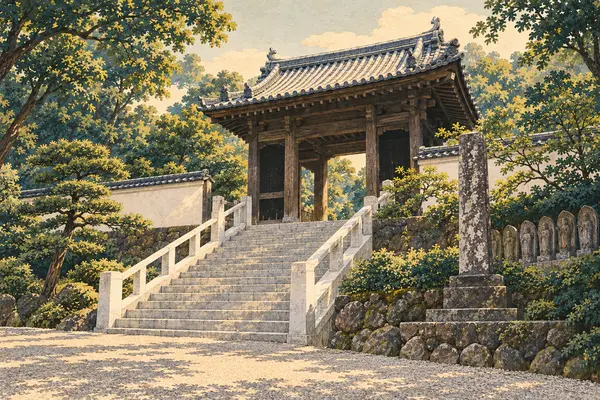
観自在寺
Kanjizai-ji's origin account attributes its establishment to Kūkai and images carved from a sacred tree. The association identifies it as the first pilgrimage temple in Ehime and describes its ties to the local coastal community.
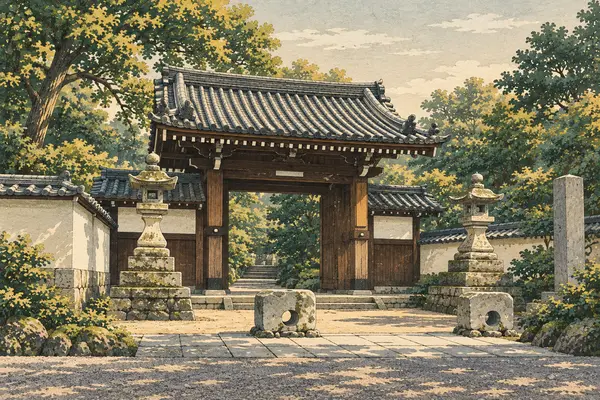
吉祥寺
Kichijō-ji's foundation account links Kūkai to images carved from a sacred cypress. The association notes its distinctive dedication to Bishamonten among the Shikoku pilgrimage temples.
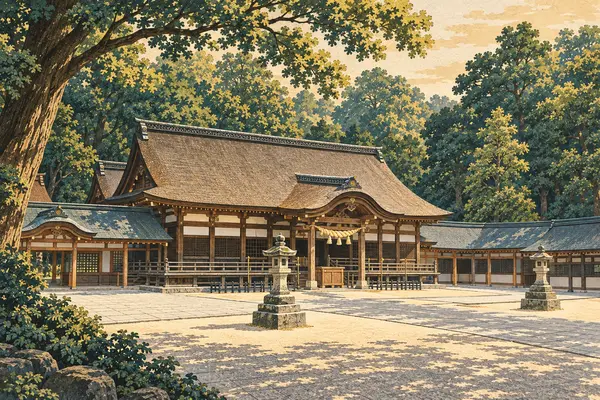
大山祇神社
Ōyamazumi Shrine’s religious tradition connects the deity Ōyamatsumi with mountains, seas and travel. Its official history describes relocation to the present Miyaura site and distinguishes surviving buildings from that early origin account.
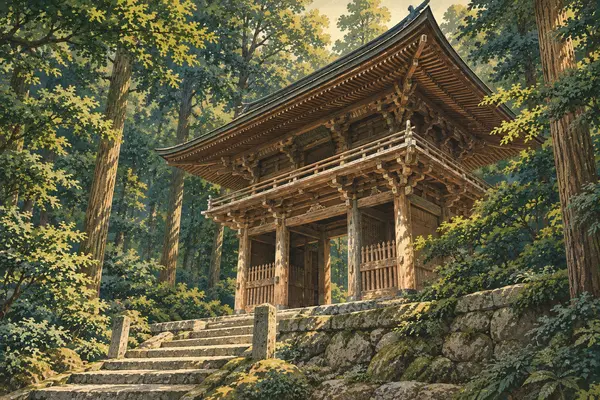
大宝寺
Daihō-ji's foundation account concerns two hunters and a Kannon image, followed by imperial establishment in 701. The association links a later visit by Kūkai with its adoption of Shingon practice and midpoint pilgrimage role.
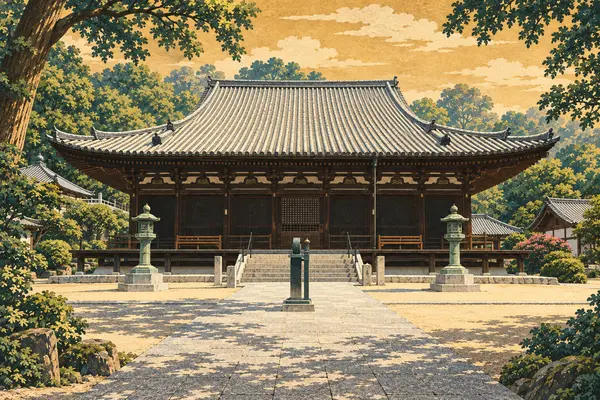
太山寺
Taisan-ji's foundation legend concerns the merchant Mano Chōja surviving a storm and constructing a hall in gratitude to Kannon. The association presents the overnight-building account as temple tradition.
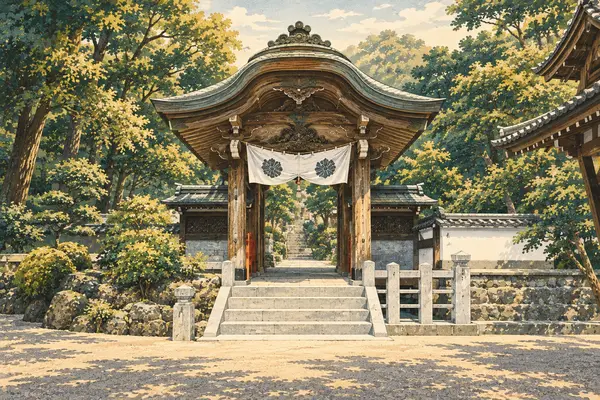
八坂寺
Yasaka-ji's origin tradition connects it with En no Gyōja and construction under Emperor Monmu in 701. The association explains its name through the opening of eight hillside approaches and the wish for continued prosperity.
No places match these filters. Try a different name, prefecture, or era.