
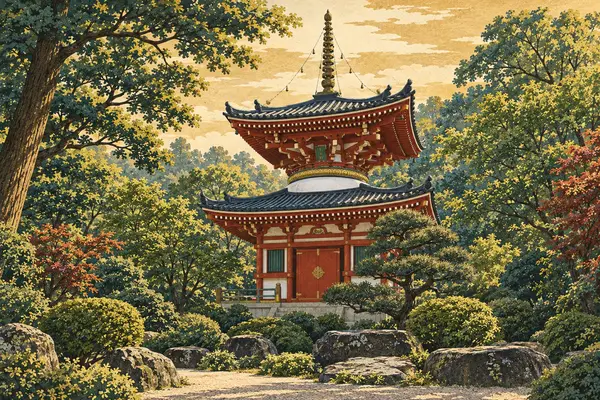
安楽寺
Anraku-ji Temple
Anraku-ji became one of Awa's roadside lodging temples under Hachisuka Iemasa. The association cites a surviving 1598 document concerning that role; the temple's identity is also closely connected with its hot springs.
Discover the places in this prefecture, with original illustrations and links to visitor sources.
14 places
13 Temples · 1 ShrinesBrowse places by founding, rebuilding, and other events in each historical era.
安楽寺
Anraku-ji became one of Awa's roadside lodging temples under Hachisuka Iemasa. The association cites a surviving 1598 document concerning that role; the temple's identity is also closely connected with its hot springs.
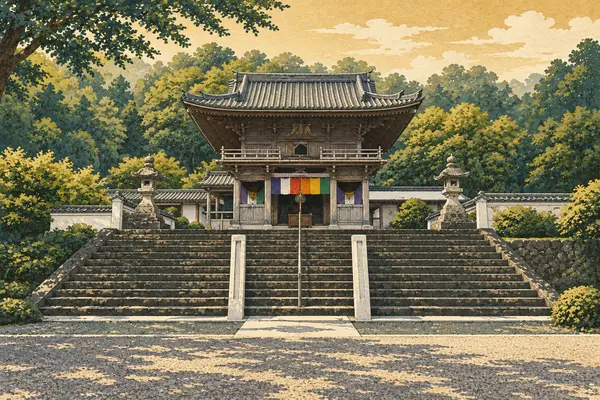
平等寺
Byōdō-ji's religious origin account describes Kūkai meditating here in 814 and making a vow connected with Yakushi Nyorai. The association identifies Yakushi as its principal deity and the site as pilgrimage temple 22.
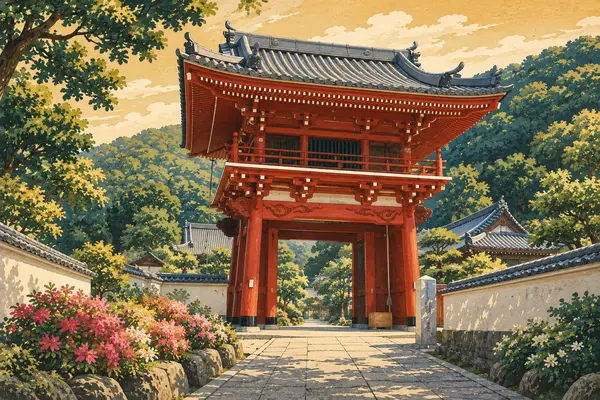
大日寺
The association attributes Dainichi-ji's founding to Kūkai and describes repeated decline and rebuilding. Its principal deity is Dainichi Nyorai, and it is the fourth temple of the Shikoku pilgrimage.
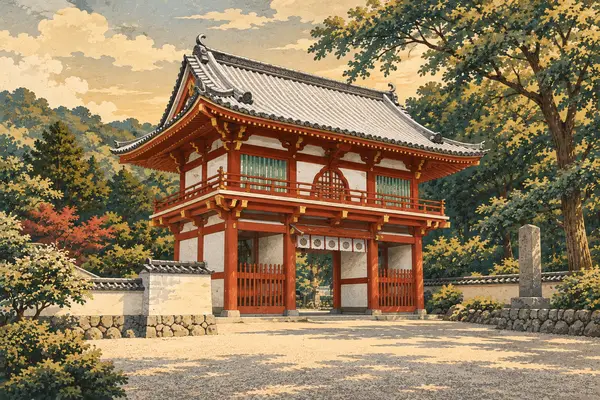
極楽寺
Gokuraku-ji's origin account links the temple to Gyōki and Kūkai's worship of Amida. The association records that the main hall was rebuilt in 1659 after earlier wartime destruction.
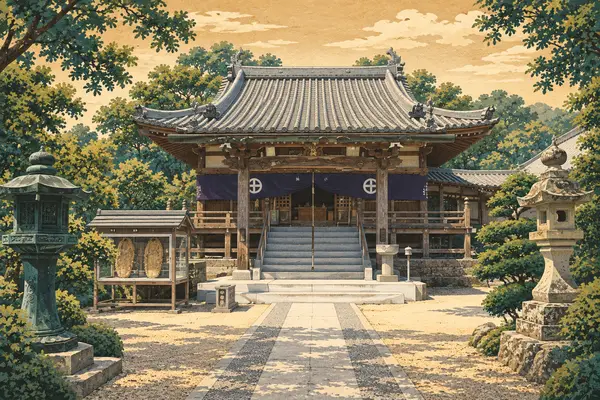
法輪寺
Hōrin-ji's origin tradition concerns Kūkai and a reclining Shaka image. The association records that the temple moved to its present site in the Shōhō era, then suffered another fire in 1859 before rebuilding.
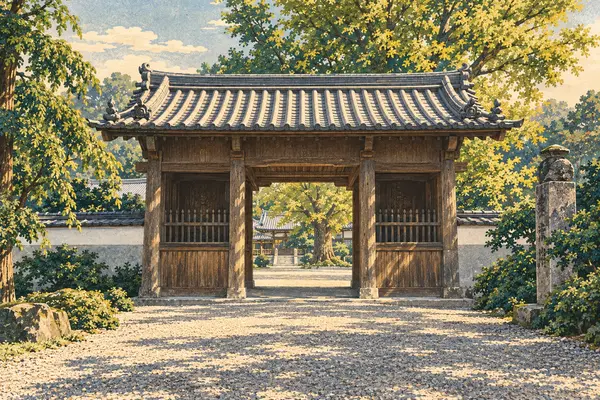
地蔵寺
Jizō-ji's foundation tradition links it to Kūkai in 821 and subsequent imperial support. Its precinct and affiliated temples were damaged in sixteenth-century conflict, after which successive priests and supporters rebuilt the temple.
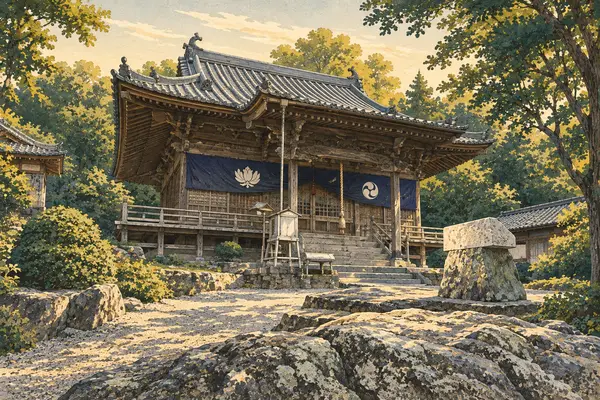
常楽寺
Jōraku-ji's foundation tradition concerns Kūkai's encounter with Miroku. After destruction and rebuilding, the association records its relocation in 1818 to the rocky precinct known for its flowing-rock garden.
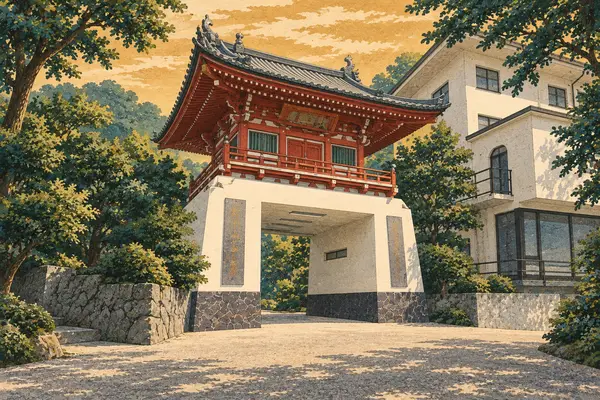
十楽寺
Jūraku-ji's founding tradition concerns Kūkai and an Amida image. The association records its relocation and reconstruction at the present site in 1635. The name expresses the wish for joy amid human suffering.
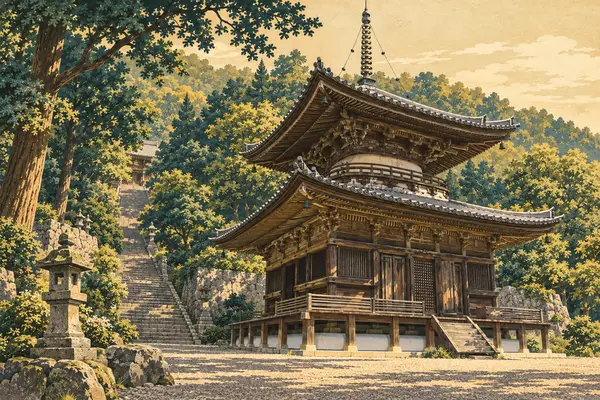
切幡寺
Kirihata-ji's name is explained through a temple legend in which a young weaver cuts cloth for Kūkai and becomes associated with Kannon. This religious narrative is retained as legend rather than established historical fact.
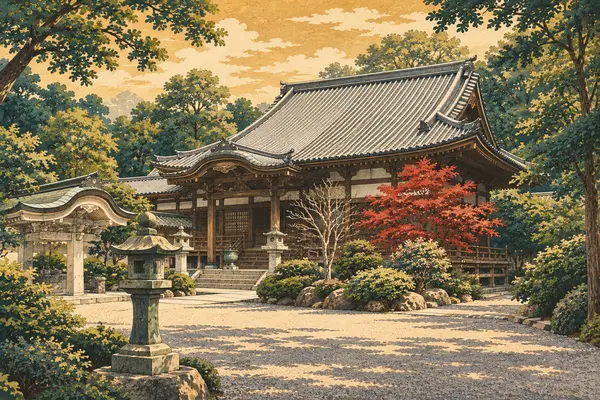
金泉寺
Konsen-ji's origin account attributes its establishment to Gyōki and its name to a well associated with Kūkai. The temple later developed close imperial connections, including a tradition concerning retired Emperor Kameyama.
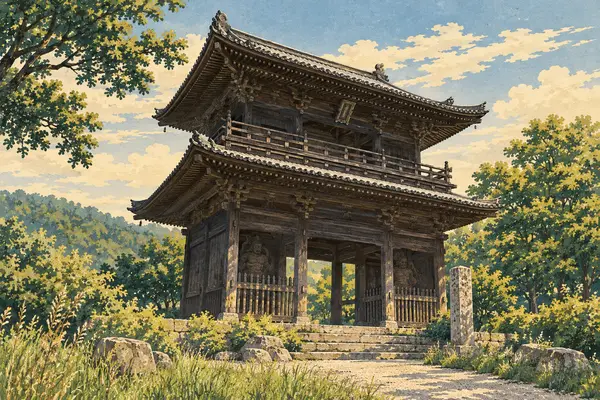
熊谷寺
Kumadani-ji's foundation story links Kūkai and a Kannon image to Kumano Gongen. The association separately records the 1687 gate, the destructive 1927 fire and twentieth-century rebuilding of the main hall.
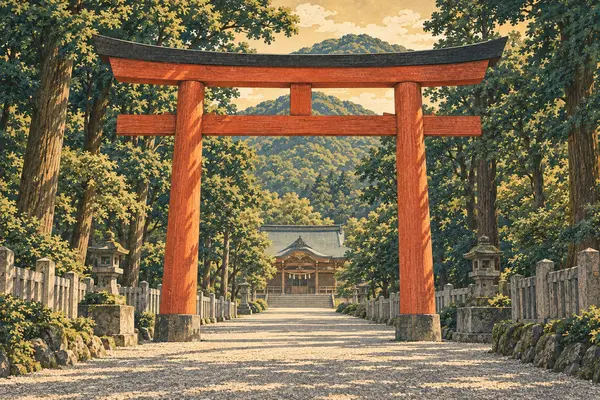
大麻比古神社
Ōasahiko Shrine’s origin tradition concerns the introduction of hemp cultivation to Awa and worship of its guardian deity. Its official history separately records the Meiji rebuilding and completion of roof restoration in 2022.
霊山寺
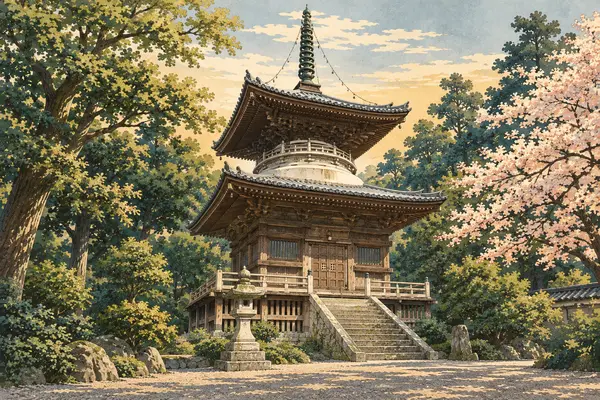
The association traces Ryōzen-ji's origins to Gyōki in the Tenpyō era and links its first-stop status to Kūkai. Its history records later destruction and reconstruction, including fires in 1582 and 1891.
薬王寺
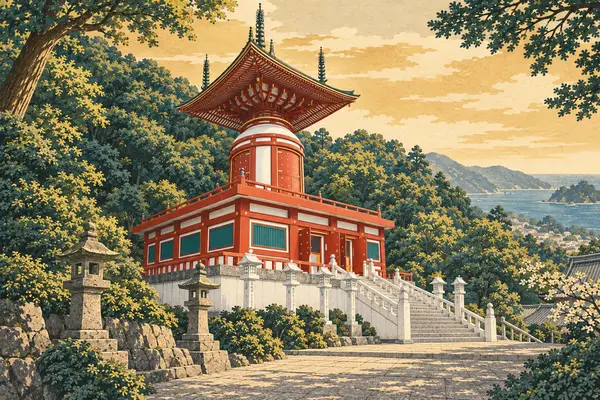
Yakuō-ji's origin account attributes its foundation to Gyōki and links its protection prayers to Kūkai. Its steps and halls are associated with traditional ages of misfortune; later fire and rebuilding form part of its history.
No places match these filters. Try a different name, prefecture, or era.